
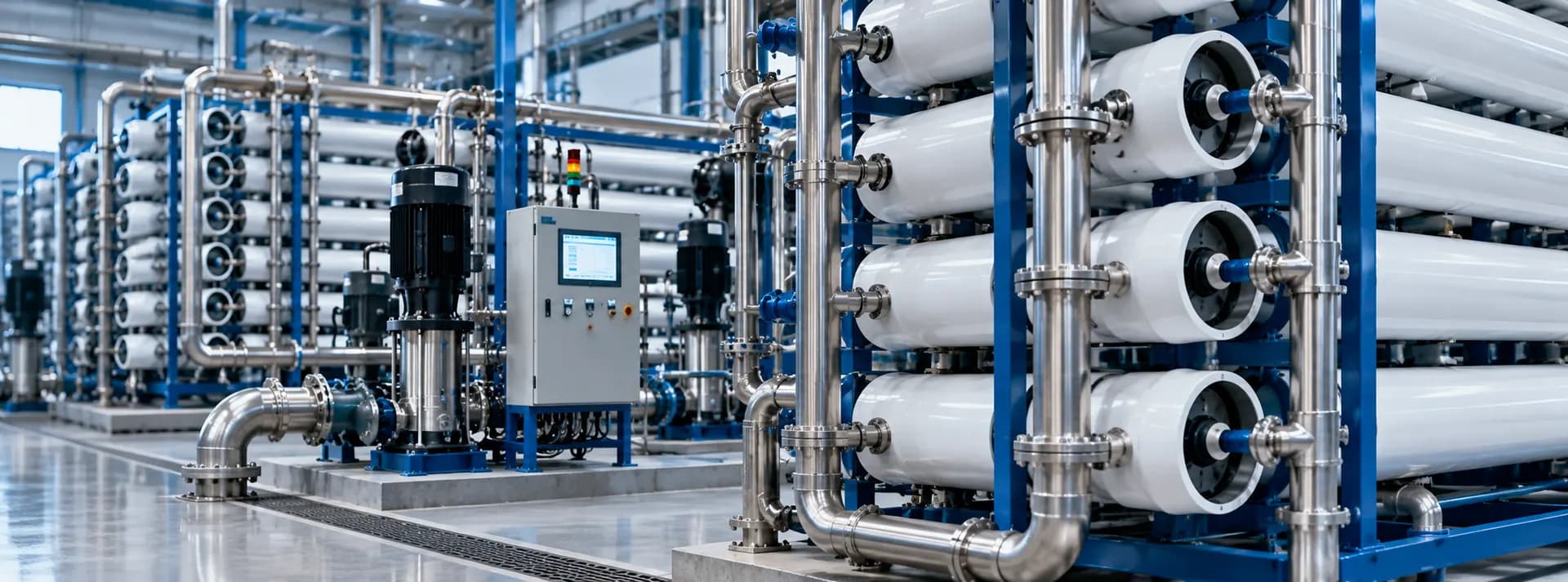
Operating RO plants
Connect the Antiscalant Enquiry to the Plant’s Current Operating Basis
For an operating reverse osmosis (RO) plant, water chemistry is only one part of the review. Recovery, temperature, pretreatment, membrane configuration, current chemical programme and recent operating changes can all affect the technical-commercial enquiry.
Product suitability and dosing cannot be determined from plant capacity or a single laboratory result alone.
The system may be familiar, but its conditions can change
An established RO plant can move away from its original design or operating basis. Feedwater source, blending, temperature, recovery, pretreatment performance, cleaning history and production targets may change over time. A procurement replacement can also introduce a different product chemistry or method.
A useful technical enquiry should therefore identify both the current operating condition and the reason for review.
What may start an RO plant antiscalant review?
A Water-Source or Seasonal Change
A new borewell, blending ratio, surface-water condition, seawater intake condition or seasonal analysis can change the scaling basis.
A Current-Product Replacement
The plant may need an alternative because of procurement, specification, availability, documentation or commercial requirements. Product equivalence should be assessed using current technical documentation and application data rather than assumed from the product category alone.
Changing Operating Trends
Changes in pressure, normalised permeate flow, salt passage, differential pressure or cleaning frequency may justify investigation, but none of these indicators alone confirms mineral scaling.
A New or Revised Procurement Specification
Procurement may require a current Technical Data Sheet, Safety Data Sheet, Certificate of Analysis basis, packaging confirmation, origin, delivery terms or formal quotation.
A Suspected Dosing or Injection Issue
Calibration, pump condition, dilution, flow pacing, tank turnover, mixing or injection-point performance may affect the delivered chemical programme.
Prepare the plant data before asking for a product or dose
Water Information
- recent feedwater analysis with units;
- sampling point and date;
- water source and blending information;
- temperature range;
- pH and alkalinity basis;
- calcium, magnesium, sulfate, silica, barium and strontium where relevant;
- iron, aluminium, turbidity, Silt Density Index (SDI) and other relevant pretreatment indicators, where available.
System Information
- design and actual feed flow;
- permeate and concentrate flow;
- design and actual recovery;
- membrane manufacturer, model and age where known;
- array and staging;
- operating pressure and temperature;
- permeate conductivity or salt passage;
- differential pressure by stage or train where available.
Treatment Information
- pretreatment process;
- coagulants, acid or alkali, biocides, reducing agents and other relevant chemical additions;
- current antiscalant name and documented dose;
- dosing-pump and injection arrangement;
- recent cleaning or maintenance history;
- known chemical or material restrictions.
Trends are more useful when they are normalised and time-based
Raw RO performance changes with temperature, feed salinity, pressure and recovery. For that reason, a time series and normalised operating data can support a more meaningful discussion than one isolated reading.
Useful records may include:
- normalised permeate flow;
- normalised salt passage or rejection;
- feed, permeate and concentrate flows;
- pressure and differential pressure;
- feed temperature and conductivity;
- actual recovery;
- cleaning dates and operating events;
- antiscalant consumption and dosing-pump checks.
Antiscalant does not operate independently of the rest of the plant
Pretreatment influences the particulate, colloidal, organic, biological and mineral load reaching the membrane system. Residual coagulant, iron, aluminium, hardness leakage, pH adjustment and changes in filtration performance may affect the overall programme.
The enquiry should identify:
- pretreatment unit operations and recent changes;
- filter performance or cartridge-filter behaviour;
- coagulant chemistry and any carryover concern;
- acid or alkali addition;
- dechlorination or reducing-agent programme;
- current antiscalant preparation, dilution and injection;
- chemical tank cleaning and turnover practices.
A website submission alone is not sufficient to diagnose pretreatment problems or prescribe plant changes. Additional information or qualified on-site assessment may be required.
Open technical question or defined commercial purchase?
Use Send Your Water Analysis When:
- the product is not yet defined;
- water or operating conditions have changed;
- a scaling concern is being reviewed;
- a current programme is being reconsidered;
- technical information is incomplete;
- the required next step is product evaluation rather than price alone.
Include Purchasing Information When:
- the product or approved specification is defined;
- quantity and delivery destination are available;
- the purchasing stage is clear;
- required documents are listed;
- packaging, timing and the preferred Incoterms® rule can be stated.
Reverse Osmosis Plant FAQs
Prepare the operating-plant enquiry
Start with the water, system and current programme
Submit the available water analysis and RO plant information. ALPHX will review the application and establish the appropriate technical and commercial next step.